Stowers Institute Debuts PISA to Expose DNA Model Bias
Researchers at the Stowers Institute have developed PISA, an AI interpretation tool that maps genomic model predictions at single-base resolution to eliminate hidden experimental biases.
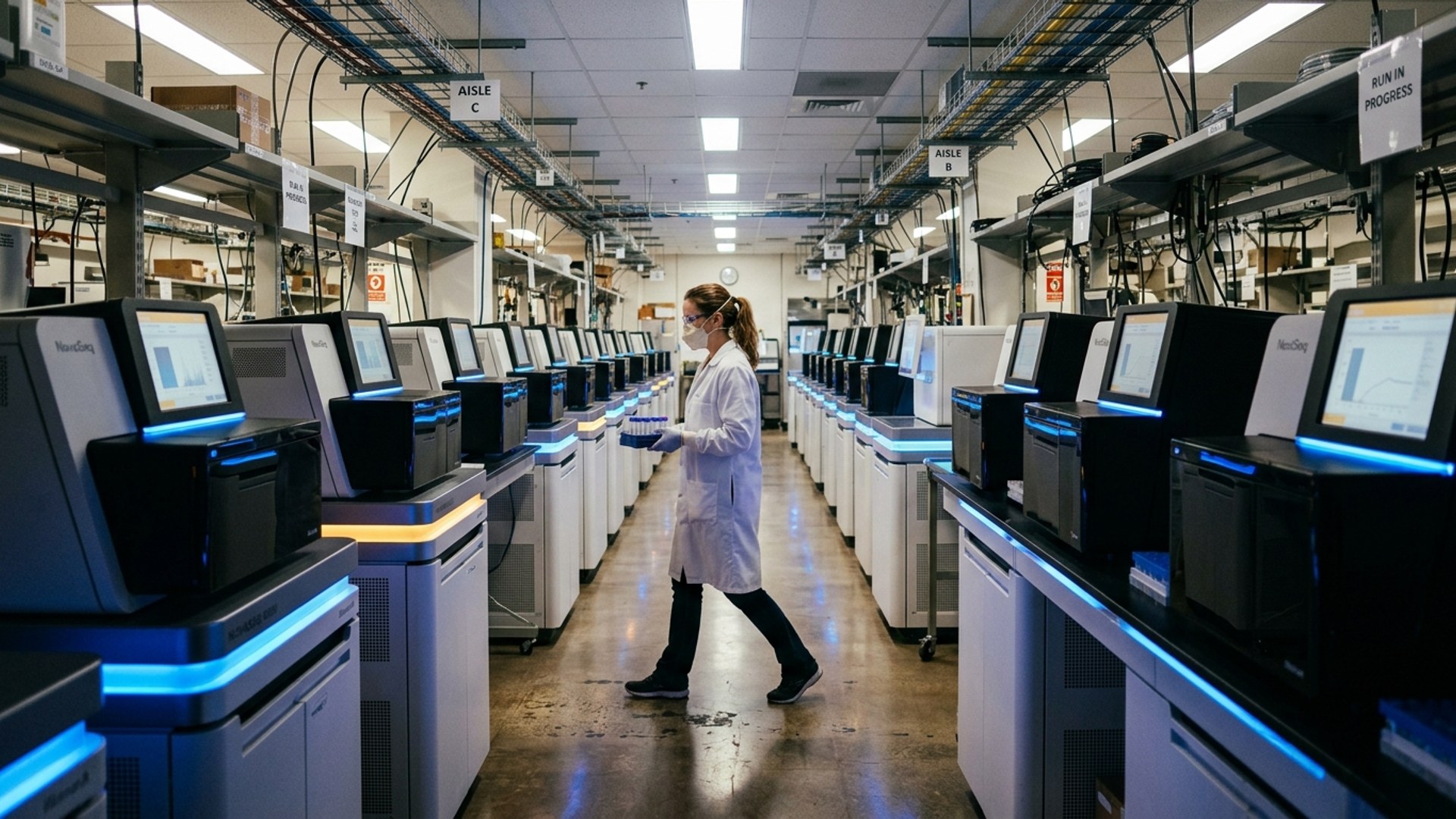
Researchers at the Stowers Institute for Medical Research, in collaboration with Stanford University, have introduced PISA (pairwise influence by sequence attribution). Published in Nature Communications in August 2026, this new interpretation method runs inside BPReveal, which is the latest extension of the BPNet deep-learning framework first created in 2021. PISA allows scientists to trace a sequence-to-function model's prediction at a specific genomic position back to every other influencing base, generating a two-dimensional map at single-base resolution.
The research team, led by Julia Zeitlinger and first author Charles McAnany, used PISA to address experimental bias in MNase-seq, a common assay for mapping nucleosomes. Because the enzyme used in MNase-seq prefers certain sequences, genomic models often mistakenly learn these experimental biases alongside actual biology. By visualizing these influences at full resolution, the researchers isolated the enzyme's signature, trained a separate model on the bias, and subtracted it to isolate the true biological signals. Zeitlinger noted that the tool is "a bit like super-resolution microscopy" for genomic data.
The bias-corrected model uncovered nucleosome-positioning sequences that extend hundreds of base pairs. It also identified thousands of chromatin domain boundaries using only nucleosome data, mapping them more precisely than traditional 3D chromatin methods that require massive sequencing depth. The team even used these biology-focused models to successfully design and experimentally validate synthetic DNA sequences.
For genomic AI practitioners, PISA solves a critical bottleneck. While models like Google DeepMind's AlphaGenome, released earlier in 2026, predict the effects of genomic variants, PISA explains which sequence features the models actually utilized. This allows researchers to audit training data, eliminate experimental artifacts, and generate highly accurate, testable biological hypotheses.
This is our own summary of reporting by Unite.AI