Prime Intellect Rewrites Prime Agent in Rust With AI Swarm
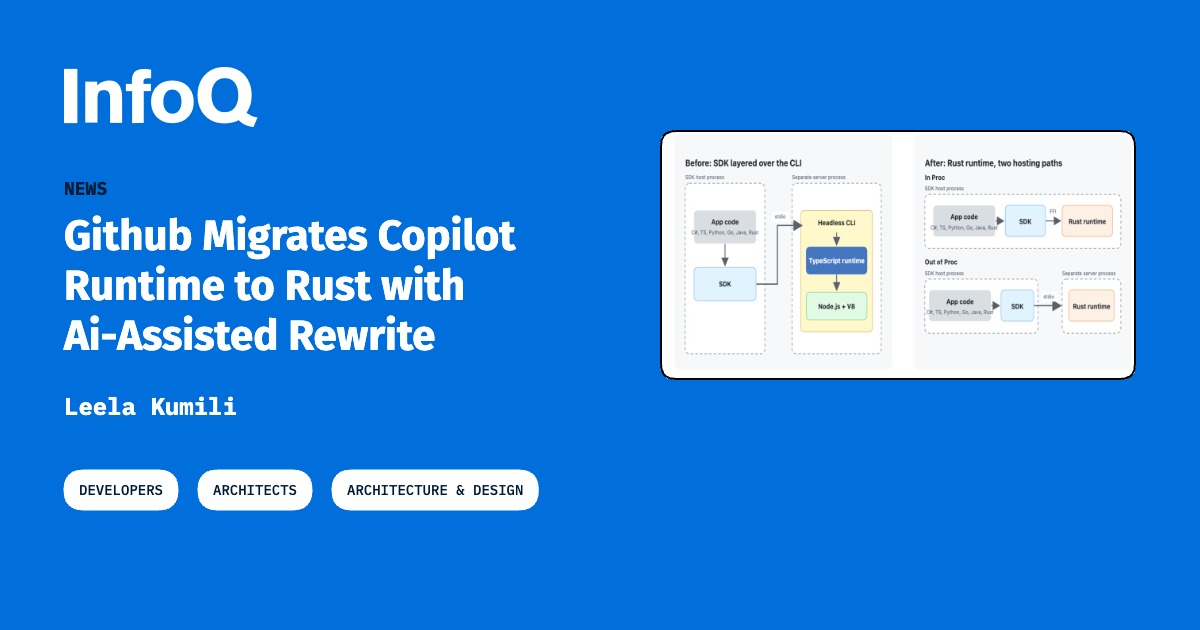
Prime Intellect deployed a swarm of 2,000 AI agents to rewrite its open-source Prime Agent harness from TypeScript into Rust, yielding major runtime speed and memory improvements.

Prime Intellect coordinated a two-week automated migration of its open-source coding harness, Prime Agent, translating the codebase from TypeScript to Rust. The operation deployed more than 2,000 AI agents using over 200 billion GLM-5.3 tokens, 10,000 sandboxes, and 16,000 inter-agent messages. The resulting software features a native Windows beta alongside Homebrew installation support, and existing users can upgrade via prime-agent update. The repository currently holds 18.1k stars and 2k forks on GitHub.
The port yielded substantial execution gains, achieving a time to usable input roughly 13 times faster than the original build while reducing startup memory consumption by 83 percent. To manage the migration, a root agent organized the codebase into a dependency graph divided across nine distinct Rust crates, including pa-daemon, pa-tui, pa-ai, pa-models, and pa-types. Work progressed through a structured four-phase state machine comprising Planner, Implementer, Reviewer, and Verifier roles, running differential tests to maintain operational parity between the old and new binaries.
For developers and practitioners, this refactoring process demonstrates how large-scale automated code translation can be managed using strict validation gates and parallelized agent architectures. However, early adopters have noted some regressions in terminal user interface polish compared to the mature TypeScript build. Furthermore, because Prime Intellect published the 200 billion token tally without declaring its compute expenses, the precise economic efficiency of running a massive multi-agent rewrite against human engineering teams remains unquantified.
This is our own summary of reporting by AlphaSignal