Scaleout Systems runs edge AI on autonomous combat drones
Swedish startup Scaleout Systems is deploying lightweight AI models on military drones to enable autonomous target selection and offline learning on active, jammed battlefields.
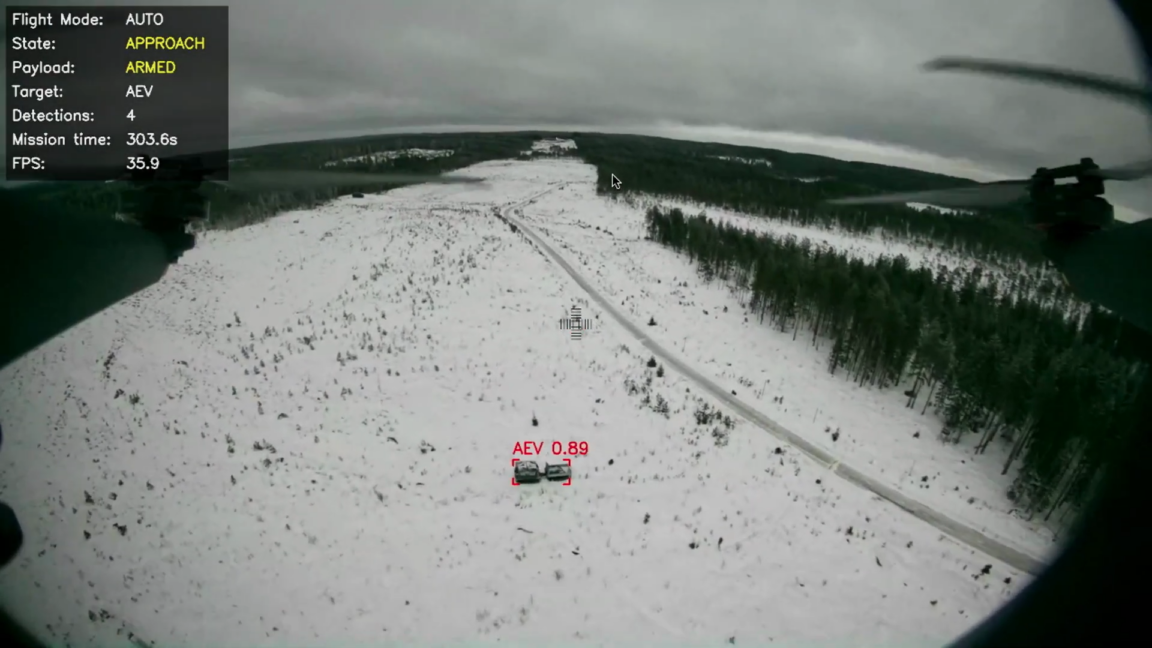
Scaleout Systems, a startup founded in 2018 by researchers from Uppsala University, has transitioned its edge-computing technology from commercial vehicles to defense applications following the 2022 invasion of Ukraine. The company is now adapting lightweight machine learning models to run directly on drone hardware, pilot tablets, and forward-deployed workstations. This edge-AI approach allows military drones to identify and select targets autonomously without relying on a continuous connection to centralized cloud servers, which are vulnerable to electronic jamming and physical attacks.
The company's technology is gaining traction through major defense initiatives. Scaleout joined NATO's Defence Innovator Accelerator for the North Atlantic (DIANA) Challenge Program in 2025, working on the Federated Aerial Intelligence for Recon project. Additionally, the startup is collaborating with BAE Systems Bofors on the Affordable Loitering Modular Ammunition (ALMA) project to develop low-cost, autonomous kamikaze drones. During the Winter Demo 2026 event in Sweden this past January, an ALMA drone successfully used onboard AI to autonomously detect, geolocate, and prioritize an armored engineering vehicle, executing a simulated strike without direct human commands.
In June, Scaleout conducted further testing at a Swedish Air Force base in Uppsala. The demonstration proved that a forward-deployed computing node could continue running AI inference and active-learning processes even after losing its connection to the company's central laboratory. Once the connection was restored, the local node successfully synchronized its updates. This federated learning strategy allows decentralized networks of drones and field computers to aggregate battlefield data, retrain models locally, and push updates back to the edge.
For defense technology practitioners and operators, this decentralized architecture solves critical operational bottlenecks. Instead of transmitting massive amounts of sensitive raw sensor data over contested airwaves, edge devices process information locally and share only selective model updates. This allows AI models to adapt to entirely new environments, such as transitioning from a desert to an urban landscape, in a single day. Ultimately, it enables resilient, collaborative intelligence across allied networks without the single point of failure inherent in centralized data centers.
This is our own summary of reporting by Ars Technica AI